
In Their Footsteps: Oscar Wilde
From Merrion Square to Literary Immortality - Explore Oscar Wilde's Dublin
1/5/20269 min read

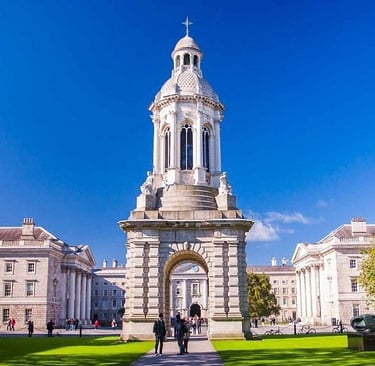
In Their Footsteps...
Welcome to "In Their Footsteps," a unique travel series that invites you to explore the world through the lives of the people who shaped it. History isn't just found in museums and textbooks—it lives in the streets they walked, the homes where they grew up, and the landscapes that inspired their greatest achievements. Whether you're a solo traveler seeking inspiration, a couple looking for a meaningful adventure, or simply someone who believes that the best journeys connect us to something deeper, this series transforms ordinary trips into extraordinary pilgrimages of discovery. Join us as we trace the footsteps of legends, uncover the stories behind the monuments, and show you how to turn any holiday into an unforgettable journey through time.
The Man Behind the Legend: Who Was Oscar Wilde?
Before we step onto the streets of Dublin, it’s essential to understand the man himself. Born on October 16, 1854, Oscar Wilde was destined for a life less ordinary. His father, Sir William Wilde, was a renowned eye and ear surgeon and a passionate antiquarian. His mother, Lady Jane Wilde, was a celebrated poet and Irish nationalist who wrote under the pen name “Speranza” and hosted famous literary salons. From his earliest days, Wilde was immersed in a world of intellectual curiosity, artistic expression, and Irish pride.
He was a brilliant student, first at Portora Royal School in Enniskillen and later at Trinity College Dublin and Magdalen College, Oxford. It was at Oxford that he truly began to cultivate his public persona as a leader of the Aesthetic movement, which championed “art for art’s sake.” He became famous for his flamboyant dress, his long hair, and his dazzling conversation, which was peppered with the epigrams that would make him famous.
His literary career was a string of successes, from his celebrated plays like The Importance of Being Earnest and An Ideal Husband to his only novel, The Picture of Dorian Gray. He was the toast of London society, a celebrated playwright, and a cultural icon. But his life took a tragic turn when his relationship with Lord Alfred “Bosie” Douglas led to a disastrous libel case against Bosie’s father, the Marquess of Queensberry. The case backfired, and Wilde was prosecuted for “gross indecency,” leading to a two-year sentence of hard labor. The trial and imprisonment destroyed his career, his health, and his spirit. He died in exile in Paris in 1900, a broken man, but his legacy as one of the greatest writers in the English language was already secure.
Your Oscar Wilde Dublin Itinerary: A Walk on the Wilde Side
Dublin is a compact and walkable city, and all the key locations in Oscar Wilde’s life are within easy reach of each other. This itinerary is designed as a one-day walking tour, but you could easily spread it over two days to spend more time at each location.
Search Flights
Get Your Guide to Dublin
Search Hotels in Dublin
Practical Information for Your Wilde Adventure
· Best Time to Visit: Dublin is wonderful year-round, but for a true Wildean experience, consider visiting in October to celebrate his birthday (October 16) or in June during the Bloomsday festival, when the city is buzzing with literary energy.
· Getting Around:** All the locations on this itinerary are within a 30-minute walk of each other. Dublin is a very walkable city, and exploring on foot is the best way to discover its hidden gems.
· Accommodation:**
* **Luxury:** The Shelbourne Hotel (from $500/£395 per night). Stay where Wilde himself stayed and proposed. An iconic Dublin experience.
* **Mid-Range:** The Merrion Hotel (from $350/£275 per night). Located directly opposite Wilde’s childhood home, this hotel is steeped in Georgian elegance.
* **Budget:** Buswells Hotel (from $200/£155 per night). A charming and historic hotel just a short walk from all the key locations.
· Food & Drink:**
* **Lunch:** The Winding Stair. A famous literary restaurant with great views of the River Liffey and a menu of classic Irish dishes.
* **Dinner:** The Saddle Room at The Shelbourne. An elegant and historic dining room perfect for a special occasion.
* **Pub:** Kennedy’s Pub. Enjoy a pint of stout in the same pub where Wilde once worked and drank.
The Enduring Legacy: Why This Journey Matters
A literary road trip through Oscar Wilde’s Dublin is more than just a sightseeing tour; it’s an opportunity to connect with the spirit of a man who believed in the beauty of art, the power of wit, and the importance of being oneself. It’s a journey that allows you to see a city not just as a collection of buildings, but as a living, breathing stage for one of history’s most compelling life stories. For solo travelers, it’s a chance for introspection and inspiration. For couples, it’s a deeply romantic experience, a shared journey into a world of poetry, passion, and enduring style. In the end, you’ll leave Dublin not just with a better understanding of Oscar Wilde, but with a deeper appreciation for the city that made him.
Additional Wilde Treasures: Beyond the Main Route
While the six stops above form the core of your Oscar Wilde journey, there are several other locations in Dublin that offer deeper insights into his world.
· Sweny's Pharmacy** on Lincoln Place is a charming Victorian chemist shop that has remained virtually unchanged since the 1850s. While it's more famous for its appearance in James Joyce's Ulysses, Wilde was a regular visitor here as a young boy, dropping off prescriptions for his father, the renowned surgeon Sir William Wilde. The pharmacy still sells lemon soap and hosts readings from Joyce's works, creating a beautiful intersection of Dublin's literary heritage. Behind the counter, you'll find a treasured first edition of An Ideal Husband displayed in a glass cabinet.
· The Giant's Garden Playground** in Merrion Square Park is named after one of Wilde's most beloved fairy tales, The Selfish Giant. This touching story tells of an ogre who bans children from his garden, only to discover that the garden can only bloom when all children are welcome. The tale was inspired by Wilde's own childhood experiences playing in this very spot, at a time when the poorer children of Dublin's tenements and slums were forbidden from entering the park. Today, children of all backgrounds play freely here, a fitting tribute to Wilde's compassionate vision.
· The Museum of Literature Ireland (MoLI)**, housed in Newman House on St. Stephen's Green, offers a modern, multimedia exploration of Irish literary heritage. While Wilde wasn't a student at University College Dublin (which was originally based here), the museum features a fascinating sound installation from The Picture of Dorian Gray titled "Words! Mere Words!" It's a powerful reminder of Wilde's mastery of language and his understanding of how words can both reveal and conceal truth.
The American Connection: Why Wilde Matters to U.S. Travelers
For American visitors, Oscar Wilde holds a special significance. In 1882, at the age of 27, Wilde embarked on a lecture tour of the United States that would last nearly a year. He visited over 140 cities, from New York to San Francisco, delivering talks on aestheticism, interior decoration, and the philosophy of art. His arrival in New York is the stuff of legend. When asked by customs officials if he had anything to declare, he reportedly replied, "I have nothing to declare except my genius." Whether or not he actually said this, the quote perfectly captures his audacious spirit.
Wilde's American tour was a sensation. He met with Walt Whitman, charmed society ladies, scandalized critics, and became a household name. He even traveled to the silver-mining town of Leadville, Colorado, where he descended into a mine shaft and drank whiskey with the miners. His influence on American culture was profound, and his wit and wisdom continue to resonate with American audiences today. For American travelers visiting Dublin, walking in Wilde's footsteps is a way to connect with a shared cultural heritage and to understand the transatlantic exchange of ideas that has always been at the heart of the English-speaking world.
Tragedy and Triumph: Understanding Wilde's Legacy
No journey through Oscar Wilde's life would be complete without acknowledging the tragedy that befell him. In 1895, at the height of his fame, Wilde's relationship with Lord Alfred "Bosie" Douglas led to a catastrophic series of events. When Bosie's father, the Marquess of Queensberry, publicly accused Wilde of being a "sodomite," Wilde made the fateful decision to sue for libel. The case backfired spectacularly. Wilde was arrested, tried, and convicted of "gross indecency" under Victorian laws that criminalized homosexual acts. He was sentenced to two years of hard labor in Reading Gaol.
The experience destroyed him. His health was shattered, his reputation was ruined, and his family was torn apart. His wife, Constance, changed her surname and took their two sons to Europe, and Wilde never saw them again. Upon his release in 1897, he moved to France, where he lived in poverty and obscurity. He wrote one final masterpiece, The Ballad of Reading Gaol, a haunting poem about his prison experience. He died in Paris on November 30, 1900, at the age of 46, reportedly saying, "My wallpaper and I are fighting a duel to the death. One or the other of us has to go."
Yet, despite the tragedy of his final years, Wilde's legacy has only grown stronger with time. His plays are performed around the world, his novel is a classic of English literature, and his quotes are shared endlessly on social media. He has become a symbol of artistic freedom, of the courage to be oneself in the face of societal pressure, and of the enduring power of wit and beauty. In 2017, Wilde was posthumously pardoned by the British government, a recognition that the laws under which he was convicted were unjust. Today, he is celebrated not just as a great writer, but as a martyr for the cause of LGBTQ+ rights and human dignity.
Planning Your Visit: Tips for the Perfect Wilde Experience
To make the most of your Oscar Wilde literary road trip, here are a few insider tips:
· Book a Guided Tour: The Oscar Wilde House at 1 Merrion Square offers expert-led tours that provide incredible detail about Wilde's life and the history of the house. Similarly, Oscar Wilde Walking Tours Dublin offers specialized walking tours that cover all the key locations with knowledgeable guides who bring Wilde's story to life.
Be Better Connected in Dublin
Hire the Right Car
Get Insured
· Combine with Other Literary Figures:** Dublin is a UNESCO City of Literature, and Wilde is just one of many literary giants who called it home. Consider combining your Wilde tour with visits to sites associated with James Joyce, W.B. Yeats, Samuel Beckett, and George Bernard Shaw. The James Joyce Centre offers excellent walking tours, and the Dublin Writers Museum provides a comprehensive overview of the city's literary heritage.
· Attend a Performance:** If you're visiting Dublin during the theater season, try to catch a performance of one of Wilde's plays. The Abbey Theatre and the Gate Theatre regularly stage his works, and there's nothing quite like experiencing The Importance of Being Earnest in the city where its author was born.
· Read Before You Go:** To fully appreciate your journey, read or re-read some of Wilde's works before you arrive. The Picture of Dorian Gray is a must, as are his major plays. For a deeper understanding of his life, Richard Ellmann's biography Oscar Wilde is considered the definitive work.
The Wilde Spirit: What This Journey Teaches Us
At its heart, a literary road trip through Oscar Wilde's Dublin is about more than just visiting historical sites. It's about connecting with a spirit of creativity, courage, and authenticity that transcends time and place. Wilde believed that life should be lived as a work of art, that beauty and truth are inseparable, and that the greatest sin is to be boring. As you walk the streets of Georgian Dublin, stand in the rooms where he was raised, and gaze at the statue that captures his essence, you're not just learning about history—you're being invited to embrace a philosophy of life that celebrates individuality, wit, and the pursuit of beauty in all its forms.
For solo travelers, this journey offers a chance for deep reflection and personal inspiration. For couples, it's a romantic and intellectually stimulating adventure that can deepen your connection to each other and to the world of ideas. And for anyone who has ever felt like an outsider, who has ever struggled to be themselves in a world that demands conformity, Oscar Wilde's story is a powerful reminder that true greatness comes from embracing who you are, no matter the cost.
So, as you conclude your tour of Oscar Wilde's Dublin, raise a glass of Irish whiskey or a pint of stout, and toast to the man who once said, "We are all in the gutter, but some of us are looking at the stars." May your journey through his city inspire you to always look up, to always seek beauty, and to always be unapologetically yourself.
Disclosure: Some of the links on this site are affiliate links, which means that – at no extra cost to you – PlanPackGo.blog may earn a small commission if you choose to make a purchase. We only share products, services, and companies that we genuinely believe in and, where possible, use ourselves. All opinions, reviews, and recommendations are entirely our own and have not been influenced, reviewed, or approved by any third party.
PlanPackGo.blog is a wholly-owned brand of DMH Media Hub.
Info:
email:
Message us:
david@planpackgo.blog
© 2025. All rights reserved.
planpackgo.blog is a wholly-owned
brand by DMH Media Hub