
Holy Island Revealed: A Journey to England's Most Atmospheric Destination
Where the tide dictates your arrival and departure, and the spirits of St. Cuthbert and Viking raiders still echo through the ruins – your guide to Lindisfarne and the stunning Northumberland coast
PlanPackGo.blog
12/9/20258 min read
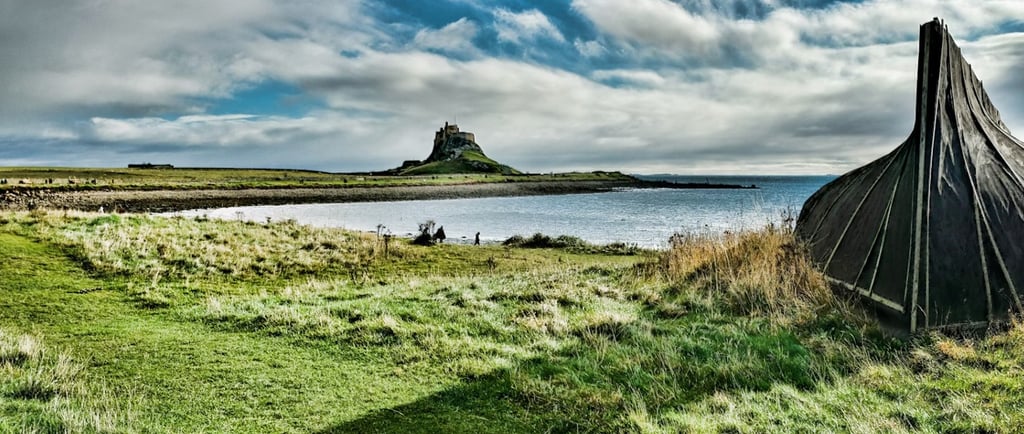
There are places on Earth that seem to exist outside of time, where the veil between past and present feels impossibly thin. The Holy Island of Lindisfarne, a tidal island off the wild coast of Northumberland in North East England, is one such place. It is a land of saints and Vikings, of ruined castles and ancient priories, a place where the rhythm of life is dictated not by the clock, but by the relentless ebb and flow of the North Sea.
For centuries, Lindisfarne has been a destination for pilgrims, a sanctuary for saints, and a place of profound spiritual power. Today, its popularity is surging as a new generation of travelers—academics, mystics, history buffs, and soul-searchers of all ages and beliefs—are drawn to its unique, mystical atmosphere. This isn't your typical holiday destination; it's a journey into the heart of Britain's history, a place that leaves an indelible mark on all who visit.
A Land Steeped in History and Legend
To understand Lindisfarne, you must first understand its past. This tiny island was the cradle of Christianity in Britain. In 635 AD, the Irish monk Saint Aidan arrived from Iona and founded a monastery here, establishing it as the epicentre of Christianity in Anglo-Saxon times. It was from this remote outpost that the Christian message spread throughout the north of England.
The monastery's most famous resident was Saint Cuthbert, a monk who became Bishop of Lindisfarne in 685 AD. He was a man of deep faith, known for his healing powers and his love of solitude and nature. His spirit is still said to permeate the very stones of the island.
However, this peace was brutally shattered on the 8th of June, 793 AD. In an event that sent shockwaves across Europe and heralded the beginning of the Viking Age, Norse raiders descended upon the unsuspecting monastery. They plundered its treasures, desecrated its sacred sites, and murdered the monks. This single act of violence left a deep, almost melancholy scar on the island's psyche. Many visitors today speak of a powerful, spiritual feeling that hangs in the air—a poignant mix of serene holiness and the lingering sorrow of that ancient atrocity. It is this profound sense of history, both sacred and tragic, that makes a visit to Lindisfarne so incredibly moving.
The Tidal Causeway: Your Gateway to Another World
Before you can experience the magic of Lindisfarne, you must first earn your passage. The island is connected to the mainland by a narrow, three-mile causeway that disappears beneath the North Sea twice a day. This isn't a bridge you can cross whenever you fancy; the tide waits for no one, and the sea reclaims its territory with relentless precision.
Safe crossing times are posted at both ends of the causeway, on local websites, and in tide tables available throughout the area. Most visitors have about five hours to cross before the water returns, transforming the road into a dangerous channel of swirling currents. Ignore the warnings at your peril—every year, a handful of overconfident drivers find themselves stranded mid-crossing, their vehicles surrounded by rising water, waiting for the RNLI lifeboat or the coastguard to rescue them from their folly.
But this tidal drama is part of what makes Lindisfarne so special. The causeway creates a natural rhythm to your visit, a forced pause that separates the island from the frantic pace of modern life. As you drive across the flat expanse of sand and mud, watching the sea retreat on either side, you feel yourself crossing not just water, but time itself. And if you do get 'stuck' on the island because you've miscalculated the tides? Well, that's not a disaster—it's an adventure. The island's pubs and guesthouses have welcomed many an accidental overnight guest, and there are far worse places to be stranded than in a cozy inn with a pint of local ale and the sound of the sea outside your window.
For the truly adventurous, there's also the ancient Pilgrims' Way—a route marked by wooden poles across the sands that can be walked at low tide. Following in the footsteps of medieval pilgrims, with nothing but the cry of seabirds and the vast expanse of sand around you, is an unforgettable experience. Just remember: always check the tide times, tell someone where you're going, and never attempt the crossing if the tide is coming in.
An Escape for the Modern Soul
What makes Lindisfarne so compelling for the modern traveler? In a world of constant noise and distraction, it offers a rare chance to disconnect. The twice-daily submersion of its causeway by the tide creates a forced isolation, a magical separation from the mainland and the frantic pace of modern life.
For solo travellers, Holy Island is a perfect sanctuary. It's a place for quiet contemplation, for long, windswept walks, and for easy conversations with locals and fellow visitors in the island's cozy pubs. The sense of safety and community is palpable, and the landscape provides a stunning backdrop for introspection and discovery.
Search with Expedia
Get Your Guide to Lindisfarne
For couples, Lindisfarne offers a unique brand of romance. It's about shared discovery, about huddling together against the North Sea wind, and about finding beauty in the island's rugged, untamed nature. Even the weather becomes part of the experience. A sudden storm rolling in across the sea is an awe-inspiring visual spectacle, best enjoyed from the warmth of a historic inn, adding an unexpectedly positive and dramatic dimension to the holiday. It's a place to create deep, lasting memories, far from the clichés of a typical romantic getaway.
Top 6 Locations in the Lindisfarne Region
The magic of Lindisfarne extends beyond the island itself, with the surrounding Northumberland mainland offering some of Britain's most spectacular scenery and historic sites.
1. Lindisfarne Priory (Holy Island)
The spiritual heart of the island. The evocative ruins of the 12th-century priory stand on the site of St. Cuthbert's original monastery. Walking among these weathered red sandstone arches is a profoundly moving experience.
· Best Time to Visit: Spring or Autumn to avoid the summer crowds and experience the site's atmospheric tranquility. Always check the tide times before planning your visit.
· Typical Weather: Often windy and exposed. Expect a mix of bright sunshine and sudden showers. Dress in layers.
· Food: After your visit, warm up with a coffee from Pilgrim's Coffee House or enjoy a hearty meal at one of the island's pubs, like The Crown and Anchor.
· Attractions: The ruins themselves, the famous 'rainbow arch', the museum displaying carved stones from the Anglo-Saxon period, and the nearby St. Mary's Church.
· Accommodation: Stay on the island to experience its true magic after the day-trippers leave.
The Manor House Hotel ($180-$250 / £140-£195) offers historic charm and sea views.
2. Lindisfarne Castle (Holy Island)
Perched dramatically on a volcanic mound called Beblowe Crag, this is not a typical castle. Originally a 16th-century fort, it was converted into a romantic holiday home by the Edwardian architect Sir Edwin Lutyens in 1901. It's a fairytale-like structure with breathtaking views.
· Best Time to Visit: A clear day offers the best views from the castle's upper battery, stretching across the sea to Bamburgh Castle.
· Typical Weather: Can be very windy. The walk up to the castle is steep and exposed.
· Food: The village has several cafes and pubs. Pack a flask of something warm to enjoy while taking in the views.
· Attractions: The castle's unique architecture, the stunning Gertrude Jekyll garden, and the panoramic views of the coastline and the Farne Islands.
· Accommodation: Belvue Guesthouse ($150-$200 / £115-£155) provides modern, comfortable rooms in the heart of the village.
3. Bamburgh Castle (Mainland)
Just a few miles south of Holy Island, Bamburgh Castle is arguably England's finest coastal fortress. Standing guard over a vast, golden beach, its imposing silhouette is a sight to behold. It was the ancient capital of the Anglo-Saxon kingdom of Northumbria.
· Best Time to Visit: Year-round. The castle is magnificent in all seasons, whether silhouetted against a summer sunset or battered by winter waves.
· Typical Weather: Coastal weather; can be breezy. The beach is perfect for a walk on a sunny day.
· Food: The village of Bamburgh has several excellent pubs and tea rooms. The Lord Crewe Arms offers fantastic seafood.
· Attractions: The castle's opulent state rooms, the Armstrong and Aviation Artefacts Museum, the archaeological excavations, and the stunning beach below.
· Accommodation: The Lord Crewe ($250-$350 / £195-£275) is a stylish boutique hotel with a superb restaurant. The Victoria Hotel ($200-$300 / £155-£235) offers a more traditional, family-friendly option.
4. Berwick-upon-Tweed (Mainland)
England's northernmost town, Berwick has a fascinating history, having changed hands between England and Scotland 13 times. Its magnificent Elizabethan walls, built to keep the Scots out, are the best-preserved in Europe.
· Best Time to Visit: Summer, when you can walk the full circuit of the town walls and enjoy the views of the River Tweed and its three iconic bridges.
· Typical Weather: Generally mild, but its coastal location means it can be windy.
· Food: Berwick has a wide range of cafes, pubs, and restaurants. Audela offers fine dining with a focus on local produce.
· Attractions: Walking the Elizabethan walls, the Berwick Barracks and Main Guard, the Lowry Trail (artist L.S. Lowry was a frequent visitor), and crossing the Royal Border Bridge.
· Accommodation: Marshall Meadows Manor House ($200-$350 / £155-£275) is a luxurious Georgian manor just outside the town. The Rob Roy Boutique Hotel ($150-$220 / £115-£170) offers stylish rooms in a restored Victorian building.
5. The Farne Islands (Mainland Boat Trip)
This cluster of islands, located a few miles off the coast, is a nationally important wildlife haven. It's one of the best places in the UK to see puffins, grey seals, and a huge variety of other seabirds.
· Best Time to Visit: The bird breeding season runs from May to late July. This is the best time to see the famous puffins. Seal pups can be seen in the autumn.
· Typical Weather: Boat trips are weather-dependent. Even on a calm day, it can be cold and choppy at sea, so wrap up warm.
· Food: Boat trips depart from the village of Seahouses, which is famous for its fish and chips. Grab a portion to eat on the harbour wall.
· Attractions: The incredible sight of tens of thousands of nesting seabirds, the close-up views of puffins, guillemots, and razorbills, and the large colony of grey seals.
· Accommodation: Stay in Seahouses for easy access to the boat trips. The Bamburgh Castle Inn ($150-$250 / £115-£195) has great views over the harbour.
6. Alnwick Castle (Mainland)
Instantly recognisable to Harry Potter fans as Hogwarts School of Witchcraft and Wizardry, Alnwick Castle is the second largest inhabited castle in England. It has been home to the Percy family, the Dukes of Northumberland, for over 700 years.
· Best Time to Visit: The castle is open from spring to autumn. Check their website for opening times and special events, such as broomstick training!
· Typical Weather: Inland from the coast, so often a little warmer and less windy than Bamburgh or Holy Island.
· Food: The adjacent town of Alnwick has plenty of options. For a unique experience, dine in The Treehouse Restaurant at The Alnwick Garden.
· Attractions: The magnificent State Rooms, the Harry Potter-themed events, the castle's rich history, and the world-famous Alnwick Garden with its Grand Cascade and Poison Garden.
· Accommodation: The Cookie Jar ($300-$450 / £235-£350) is a chic and quirky boutique hotel in a former convent. The White Swan Hotel ($150-$250 / £115-£195) is famous for its Olympic Suite, which contains fixtures and fittings from the sister ship of the Titanic.
An Unforgettable Experience
A journey to Lindisfarne and the Northumberland coast is more than a holiday. It's an immersion in a landscape that is both beautiful and brutal, a place where history is not just read about, but felt. It's the cry of the gulls, the salty spray of the North Sea, the silence of the ancient priory, and the warmth of a pub fire. It's a place that gets under your skin and stays in your memory long after the tide has washed your footprints from the sand. For those seeking a truly unforgettable travel experience, the magic of Holy Island is waiting.
Disclosure: Some of the links on this site are affiliate links, which means that – at no extra cost to you – PlanPackGo.blog may earn a small commission if you choose to make a purchase. We only share products, services, and companies that we genuinely believe in and, where possible, use ourselves. All opinions, reviews, and recommendations are entirely our own and have not been influenced, reviewed, or approved by any third party.
PlanPackGo.blog is a wholly-owned brand of DMH Media Hub.
#Lindisfarne #HolyIsland #Northumberland #VikingHistory #StCuthbert #BamburghCastle #UKTravel #SpiritualTravel #VisitEngland #HistoricBritain
Info:
email:
Message us:
david@planpackgo.blog
© 2025. All rights reserved.
planpackgo.blog is a wholly-owned
brand by DMH Media Hub